
Automotive APQP and PPAP
APQP and PPAP support structured automotive quality planning and production approval. They connect customer requirements, product design, process design, validation and evidence that the production process can meet requirements.
ENGINEERING TOPIC 01
APQP overview
Understand the typical planning phases and their outputs.
Plan and define the programme
Product design and development
Process design and development
Product and process validation
Feedback, assessment and corrective action
ENGINEERING TOPIC 02
Product and process readiness
Connect engineering design with manufacturing preparation.
Design requirements and design reviews
Process flow and manufacturing feasibility
PFMEA and control plan
Measurement systems and inspection methods
Trial runs and production validation
ENGINEERING TOPIC 03
PPAP evidence
Understand common evidence elements, subject to customer requirements.
Design records and approved changes
Engineering change documents
Process flow and PFMEA
Control plan and measurement results
Material and performance test results
Capability studies and sample parts where required
ENGINEERING TOPIC 04
Customer-specific requirements
Do not assume one universal submission level or evidence package.
Confirm customer manual and current revision.
Confirm submission level and required elements.
Resolve deviations and obtain approvals.
Maintain traceability to the production process and approved design.
Continue Learning
Explore related automotive engineering topics:
Automotive ECR and ECN Engineering Change ManagementAutomotive Quality EngineeringEngineering Documentation and Design ReviewsPractical Automotive Engineering Assignments
ENGINEERING APPLICATION
How APQP connects product intent to production readiness
APQP is a cross-functional planning framework. It connects customer requirements, product design, process design, verification, production controls and launch readiness. It is not simply a document checklist.
In an automotive programme, the product engineer must understand how a design decision affects tooling, supplier capability, inspection, process risk, traceability and the evidence required for customer approval. APQP activities and gate names vary by OEM, supplier and programme; always follow the applicable customer-specific requirements and current framework edition.
| Planning phase | Engineering questions | Typical evidence |
|---|---|---|
| Plan and define | What does the customer require? Which regulations, interfaces, targets and assumptions apply? | Requirement matrix, feasibility review, programme risks |
| Product design and development | Does the design satisfy function, packaging, materials, durability and safety requirements? | Drawings/specifications, DFMEA, design reviews, prototype results |
| Process design and development | Can the supplier repeatedly manufacture and assemble the design? | Process flow, PFMEA, control plan, tooling and inspection planning |
| Product and process validation | Does the product meet requirements using the intended production process? | Trial build evidence, dimensional results, material/performance tests |
| Feedback, assessment and corrective action | Are launch issues controlled and lessons fed back into the process? | Issue log, corrective actions, capability evidence, lessons learned |
PPAP: demonstrate that the production process is ready
Production Part Approval Process evidence is assembled to show that the supplier understands the customer requirements and can manufacture conforming parts under the defined production conditions. The required submission level and elements are customer-specific. Typical evidence can include design records, authorised engineering changes, dimensional results, material/performance test results, process flow, PFMEA, control plan, measurement-system evidence, capability studies where required, sample parts and the Part Submission Warrant.
Practical exercise: a stamped reinforcement bracket
Translate the supplied drawing and performance specification into measurable product characteristics.
Review material, thickness, forming direction, edge condition, joining access and datum strategy.
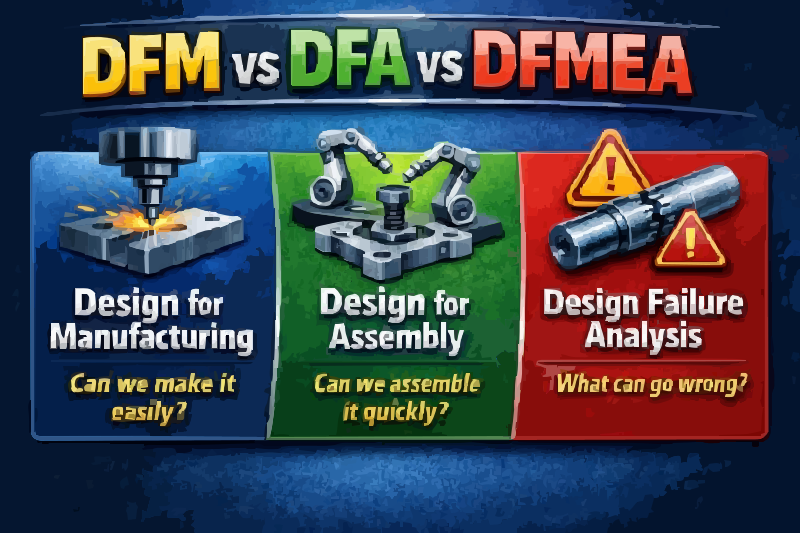
Identify product and process failure risks; link design risks to DFMEA and process risks to PFMEA.
Define dimensional and material verification methods with acceptance criteria from the authorised specification.
Prepare a sample APQP evidence index and identify missing approvals before a production-intent submission.
Assessment evidence: requirement traceability matrix, feasibility review, DFMEA/PFMEA linkage, control-plan review, dimensional report outline and a clear explanation of why each PPAP element is required.
Important distinction: APQP plans the work and evidence across development. PPAP is a customer approval submission based on the defined production process. Neither replaces engineering judgement or product validation.
Build your automotive engineering knowledge
Explore the technical subjects or contact MYTECHLEARN about your learning objectives.
Enquire Now