Assembly datum
A reference feature or target used to locate a component or assembly during build, inspection or functional evaluation.

TECHNICAL GLOSSARY · 60 ARTICLES
Search concise definitions and practical context for automotive component engineering, manufacturing, dimensional management, quality, validation and product release.
Each term has its own page with a definition, engineering application and related learning link.
A reference feature or target used to locate a component or assembly during build, inspection or functional evaluation.
Advanced Product Quality Planning is a structured framework for planning quality activities across product and process development.
The structural body member between the front and rear door apertures that contributes to side structure, roof and rocker load paths.
A structural housing that protects EV battery modules and provides interfaces for sealing, cooling, mounting and vehicle attachment.
A Bill of Materials lists the parts, quantities and relevant identifiers needed to define a product or assembly.
A defined constraint, load, support or environmental assumption used in an engineering analysis or test.
The difference between nominal design geometry and the geometry achieved across parts and assemblies in production.
The available space between two parts or features under a defined condition.
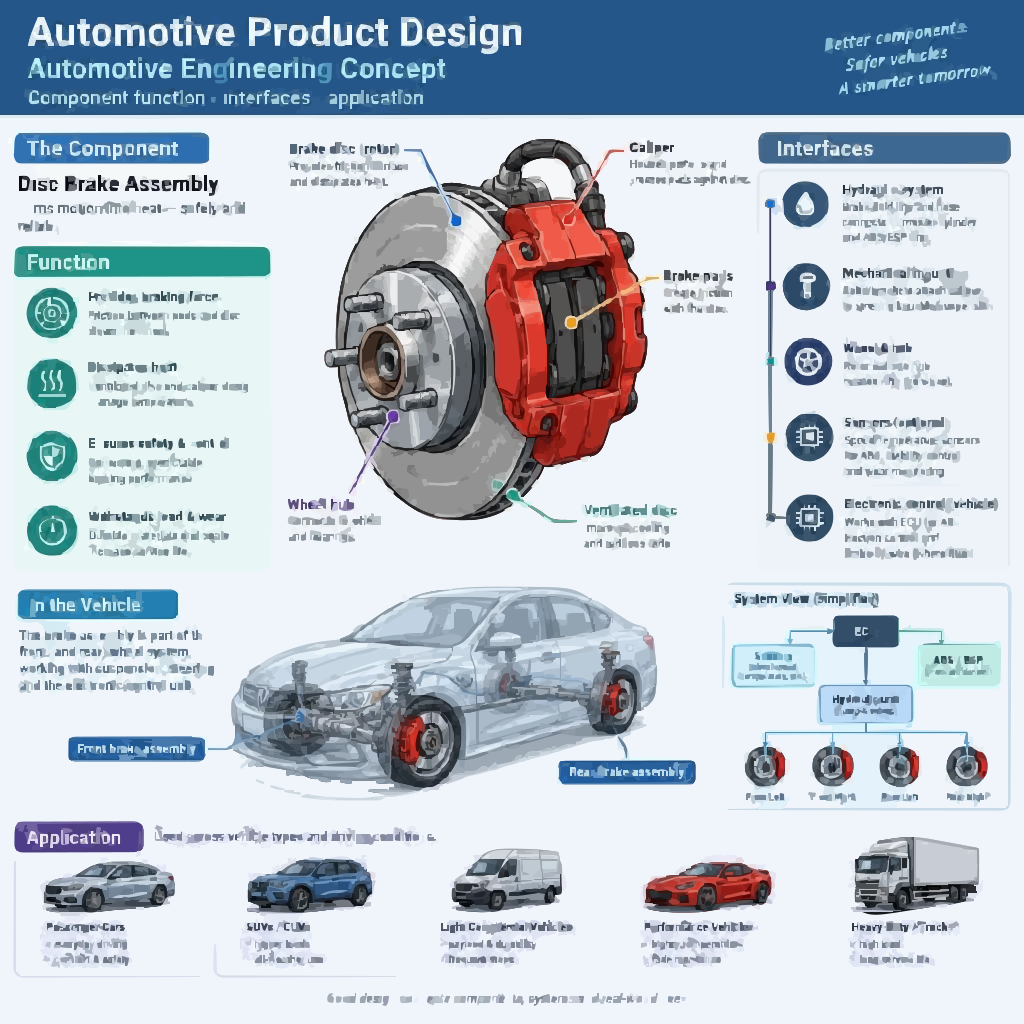
The physical, functional, dimensional or electrical relationship between a component and its mating system.
A documented plan identifying product/process characteristics, control methods, sampling and reaction plans.
A product or process characteristic requiring defined control because of its impact on safety, regulation, function or customer requirements.
An actual part feature identified to establish a datum for geometric dimensioning and tolerancing.
A theoretically exact reference system established from datum features to orient and locate a part for geometric control.
Design for Assembly evaluates how product design affects part handling, orientation, joining, access and assembly sequence.
Design for Manufacturing evaluates whether a design can be produced consistently with the intended process, tooling and capability.
Design Failure Mode and Effects Analysis is a structured team method for identifying and reducing risks arising from product design.
Design Verification Plan and Report records planned verification activities, requirements, methods, acceptance criteria and results.
Engineering Change Request is a formal proposal to evaluate a product or process change before approval.
Engineering Change Notice communicates an approved engineering change and its controlled implementation details.
The defined point, date, serial range, plant, batch or vehicle configuration from which a change applies.
The space and tool approach required to install, tighten, inspect or remove a fastening element.
A GD&T annotation that communicates a geometric characteristic, tolerance, modifiers and datum references.
The ability of parts to assemble as intended and perform their required function under defined conditions.
An extended edge or surface used for joining, mounting, stiffness, sealing or interface definition.
The ability of a material to undergo a manufacturing deformation without unacceptable defects.
Gap is the separation between adjacent surfaces; flush is their relative surface alignment.
Geometric Dimensioning and Tolerancing is a symbolic language for communicating allowable geometric variation and design intent.
A sheet-metal edge-folding operation commonly used to join outer and inner closure panels.
A controlled document defining key relationships, dimensions, requirements and responsibilities at a system boundary.
The planned selection and arrangement of joining methods to meet strength, durability, process and access needs.
The space occupied by a component throughout its intended motion or adjustment range.
The route through which forces travel through connected components and joints.
A controlled cross-sectional definition used to communicate key geometry and relationships across vehicle systems.
A controlled definition of material grade, condition, thickness, coating and relevant properties.
A method for evaluating whether a measurement process is suitable for the characteristic and decision being made.
The intended design value before the allowed variation is applied.
The boundary where mold or die sections meet and separate during a manufacturing process.
Production Part Approval Process provides evidence that the supplier's process can consistently produce parts meeting requirements.
The first datum in a datum reference frame, establishing the initial orientation or location constraint for a part.
A statistical assessment of process output relative to specification limits under defined assumptions.
A geometric control that defines a boundary zone around a surface or line relative to specified datums where applicable.
A planned build using representative parts and processes to evaluate fit, function, assembly and design maturity.
Repeatability and Reproducibility study evaluates variation attributable to a measurement system and its operators.
A documented set of actions to take when a process or product check indicates nonconformance or loss of control.
The controlled collection of approved product definition and supporting records required for downstream use.
The variation observed when the same operator and measurement system measure the same item under the same conditions.
A method or decision framework used by an FMEA team to prioritise actions based on assessed risk.
A statistical method for estimating combined variation when contributing variations are treated as independent and assumptions are appropriate.
A geometric tolerance related to the variation of a surface or feature during rotation about a datum axis.
Unwanted audible noise caused by relative motion, contact, friction or impact between components.
The signed relationship showing whether each dimension increases or decreases the functional result.
A fixed engagement feature that interacts with a latch to retain a closure in its closed position.
A structured review of whether a supplier can manufacture and verify the design with available processes and controls.
The permitted variation from a specified nominal value or geometric requirement.
A closed chain of dimensions and geometric relationships that determines a functional result.
The ability to connect a requirement, design decision, verification result and released configuration.
Confirmation that the product meets intended use and user/programme needs under representative conditions.
Evidence that a defined requirement or design output has been met using an appropriate method.
A derived boundary related to a feature's size and geometric tolerance, used in certain GD&T applications.
The thickness of a component wall, particularly relevant to molded, cast or formed parts.
The physical space and tool approach needed to create and inspect a specified weld joint.
A tolerance analysis method that combines dimensional extremes to determine guaranteed maximum and minimum functional conditions.
A vehicle electrical/electronic architecture that groups functions and connections by physical zones.
COMMON QUESTIONS
Answers about using the glossary and building precise engineering vocabulary.
As a quick reference when you meet an unfamiliar term in an assignment, case study or interview preparation. Accurate vocabulary improves both understanding and professional communication.
No. They are concise, learning-oriented explanations intended to give working meaning. For formal compliance work you must consult the governing standard or customer specification.
Ambiguous language causes misaligned assumptions about function, tolerance, process or responsibility. Clear terms reduce the chance of expensive misunderstandings.
Yes. Use the contact page to propose terms or improvements. The glossary is intended to grow with learner and industry needs.
Interviewers expect you to use correct terms for datums, geometric controls, process capability, failure modes and validation activities. Fluency signals that you can operate in a professional engineering conversation.