
Automotive Product Design Courses for OEM and Tier-1 Careers
Nine design domains, seven engineering methods and six portfolio outputs. Compare courses by vehicle system, deliverables and the employer types they prepare you for.
Industry-grade detail
| Course | What you design and review | Key deliverable | Employer fit |
|---|---|---|---|
| BIW | Master sections, stamping DFM, spot-weld access | Master section dossier | OEM body, Tier-1 structures |
| Closures | Hinges, latches, seals, sag, gap and flush | Closure DFM and stack-up | OEM closures, Tier-1 door systems |
| Interior | Instrument panel, trims, clips, squeak and rattle | Plastics DFM review | Tier-1 interiors, OEM trim |
| Exterior | Bumpers, grilles, parting lines, paint feasibility | Gap and flush study | Tier-1 exteriors, OEM styling feasibility |
| Seating | Frames, tracks, recliners, anchorage | Frame concept comparison | Seating Tier-1, OEM seat engineering |
| Lighting | Lamp architecture, joining, venting, aiming | Lamp feasibility review | Lighting Tier-1, OEM lighting |
| EV and battery | Pack enclosure, sealing, thermal, crash | Enclosure study and DVP&R | EV OEM, pack suppliers, services |
| GD&T | Datums, position, profile, stack-up | Drawing analysis report | All employers |
| Mechanical design | Sheet metal, plastics, drawings, DFM | Component study | Foundation for every route |
Choose a domain, then build connected engineering capability
Start with a focused engineering domain and connect it to the methods that support product decisions. Programmes run for 4 to 6 months. Fees are shared at the time of admission; eligibility, delivery mode and current batch availability are explained during counselling.

VISUAL DOMAIN GUIDE
Explore the Eight Automotive Engineering Domains
Choose a technical specialisation to review its component architecture, engineering interfaces, manufacturing considerations and learning scope.

01. BIW Engineering
Study underbody and upperbody architecture, panel development, section strategy, weld locations and datum planning.
Explore BIW programme →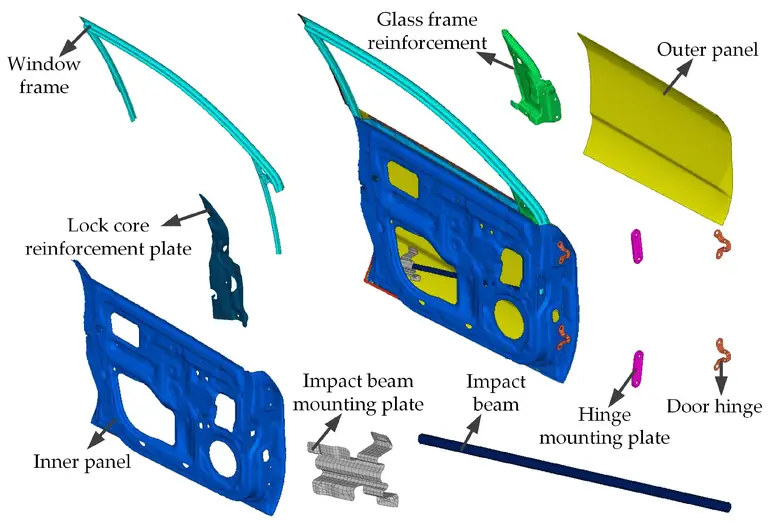
02. Closures Engineering
Review door inner and outer panels, hinge axes, latch paths, weather-seal interfaces, adjustment and closing effort.
Explore closures →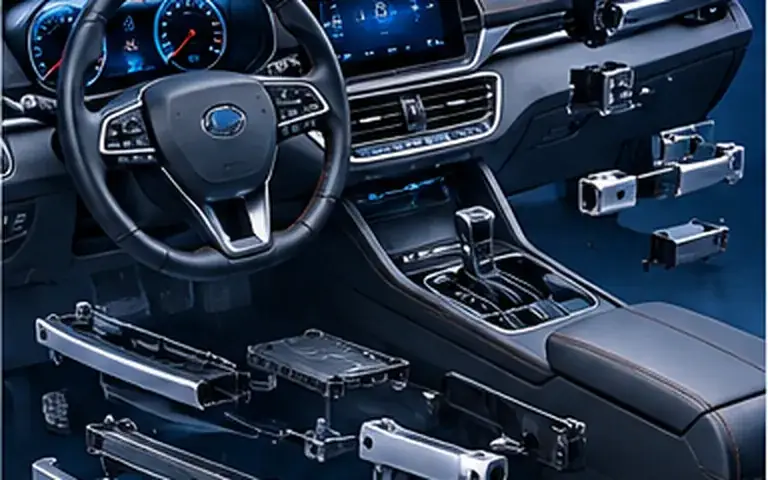
03. Interior Engineering
Explore substrate and skin construction, attachment features, airbag interfaces, material selection and cabin fit-and-finish.
Explore interior →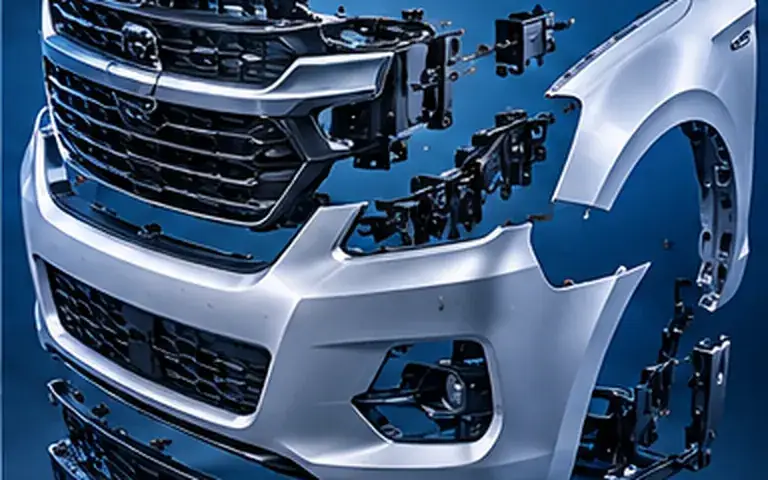
04. Exterior Engineering
Examine fascia support, energy absorbers, grille integration, lamp interfaces, pedestrian-safety packaging and mould release.
Explore exterior →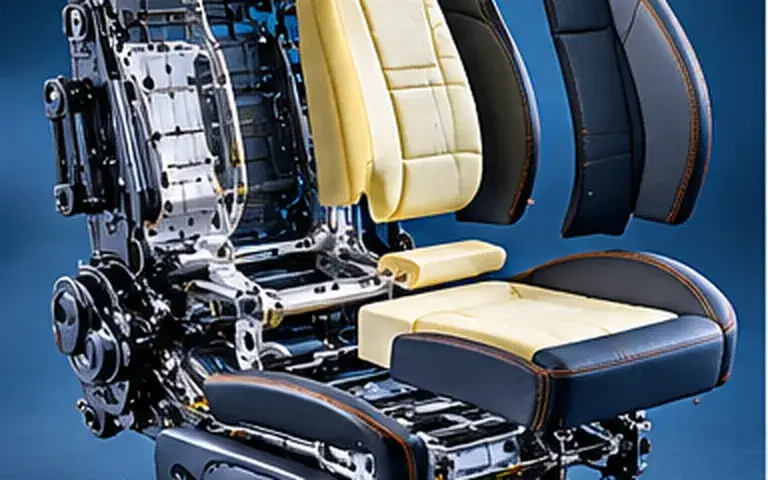
05. Seating Engineering
Understand recliner and track mechanisms, frame load transfer, anchorage points, restraint integration and occupant packaging.
Explore seating →
06. Lighting Engineering
Compare reflector and projector layouts, lens and housing interfaces, LED heat paths, condensation control and beam compliance.
Explore lighting →
07. EV Engineering
Review pack structure, cell-to-pack arrangement, cooling plates, sealing strategy, service access and vehicle-level protection.
Explore EV engineering →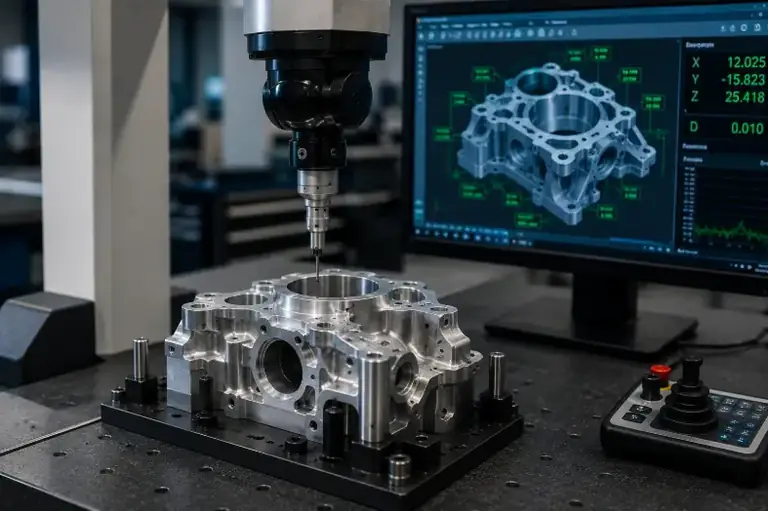
08. GD&T Engineering
Practise datum selection, position and profile controls, tolerance-chain calculations, inspection planning and drawing interpretation.
Explore GD&T →Images are illustrative engineering learning references, not released OEM drawings or production specifications.
Automotive Engineering Domains – Learning Scope
Use this overview to compare the engineering focus areas. Programme depth, sequence and deliverables should be confirmed during the technical demo.
| Engineering domain | Representative scope | Connected methods | Learning evidence |
|---|---|---|---|
| BIW | Body structure, sheet metal, load paths and joining | DFM, GD&T, joining, validation | Master sections, joining and datum reviews |
| Closures | Doors, hood, tailgate, hinges, latches and sealing | Kinematics, tolerance stack-up, DVP&R | Interface and gap/flush review |
| Interior | Instrument panel, door trim, console and pillar trims | Plastic DFM, DFA, retention and quality | Component and attachment review |
| Exterior | Bumpers, fascia, grille, fenders and cladding | Moulding feasibility, fitment and validation | Mounting and fitment review |
| Seating | Frames, recliners, tracks, foam and occupant interfaces | DFMEA, joining, durability and packaging | Mechanism and interface review |
| Lighting | Headlamps, tail lamps, optics, housing and sealing | Thermal, sealing, DFA and validation | System architecture and interface review |
| EV & Battery | Battery enclosure, module packaging, cooling and sealing | Structural integration, thermal interfaces and safety | Enclosure and interface review |
| GD&T | Datums, geometric controls, inspection and dimensional variation | ASME Y14.5 / applicable ISO GPS, stack-up | Drawing interpretation and tolerance analysis |
The examples are learning topics, not universal OEM specifications. Applicable customer standards, approved drawings and programme requirements take precedence.
See Programmes and the eight engineering domains for the structured learning map. For current course schedules and mentor availability, use the free technical demo enquiry.
Automotive Product Design Courses for OEM and Tier-1 Caree: from requirements to engineering evidence
Automotive engineering courses are most useful when their scope is explicit. A prospective learner should be able to identify the target competency, prerequisite knowledge, engineering domain, expected assignments and evidence of learning.
Automotive Product Design Courses for OEM and Tier-1 Caree workflow and engineering decision points
Compare a course by subject coverage, depth, practical exercises, tool access, assessment approach and the type of engineering deliverable produced. Confirm current duration, fees, delivery mode and batch availability directly with MYTECHLEARN before making a decision.
Automotive Product Design Courses for OEM and Tier-1 Caree: illustrative engineering example
A BIW learning path may cover body architecture, sheet-metal design, joining, datum strategy and dimensional control; a GD&T path may cover datum reference frames, feature control frames, inspection interpretation and variation analysis.
Discuss Automotive Product Design Courses for OEM and Tier-1 Caree with MYTECHLEARN
Share your background and the engineering domain you want to build. We will explain the learning scope and practical next steps.
PROGRAMME SCHEDULE & FEES
A structured automotive engineering learning programme
Review the programme structure and confirm current-cohort duration, delivery mode and investment before enrolment.
| Programme information | Details |
|---|---|
| Programme duration | 4 to 6 months; the selected pathway and cohort schedule are confirmed in writing |
| Delivery mode | Confirm for the current cohort |
| Programme Investment | Investment details and payment options will be shared during the admission counselling process. |
| Batch start date and weekly timetable | Batch timetable is provided at the time of joining |
| Eligibility and prerequisites | Diploma holders and graduates in Mechanical, Automotive, Production or Automobile Engineering; diploma holders from CITD, CIPET and NTTF |
| Career support | Placement assistance continues until the learner secures a job, without additional charges for continued assistance; terms are confirmed in writing at admission. Employment is not guaranteed |
| Assessment and certificate terms | MYTECHLEARN certificate awarded on successful completion of the programme, subject to the stated assessment and completion requirements |
Confirm the current cohort before enrolment
Programme duration is 4 to 6 months. Fees are communicated individually at the time of admission. Request written confirmation of the selected pathway, delivery mode, batch calendar, assessment, certificate conditions and placement-assistance terms before enrolment.
PROGRAMME STRUCTURE
Indicative programme learning sequence
The sequence below is a programme framework, not a fixed-duration schedule. The batch calendar, session hours and domain-specific depth must be confirmed in writing with MYTECHLEARN before enrolment.
- Stage 1 – Automotive product-engineering foundations: vehicle systems, component functions, engineering drawings, materials, manufacturing processes and product-development stages.
- Stage 2 – Domain architecture and design intent: select the relevant domain; study component architecture, packaging, interfaces, master sections and functional requirements.
- Stage 3 – Design for manufacturing and assembly: apply DFM/DFA, material/process constraints, joining or attachment strategy, serviceability and supplier feasibility.
- Stage 4 – Dimensional engineering and quality: GD&T, datum strategy, tolerance stack-up, measurement planning and fit/function assessment.
- Stage 5 – Risk, verification and documentation: DFMEA, DVP&R, design reviews, engineering change control and relevant APQP/PPAP concepts.
- Stage 6 – Integrated applied assignment: develop and present a domain-related learning dossier with assumptions, design rationale, manufacturing considerations, dimensional checks, risks and verification evidence.
Assessment and learning outcomes
Progress can be reviewed through concept checks, guided exercises, design reviews, assignment feedback and a final presentation. By the end of the programme, learners should be able to explain domain-specific engineering decisions, interpret relevant documentation, identify manufacturing and dimensional risks, and present a structured learning portfolio.
Specific assessment weights, certificate details, session hours and project scope must be confirmed by MYTECHLEARN; this page does not imply an external accreditation or OEM certification.
Choose a domain, then follow a practical learning pathway
The course pathway connects automotive fundamentals with domain application, engineering methods, documented assignments and career preparation.
- 01
Learn the fundamentals
Understand automotive product architecture, component functions, interfaces and engineering requirements.
- 02
Gain practical experience
Work through guided component studies, packaging reviews and realistic engineering assignments.
- 03
Build your portfolio
Document design rationale, interface checks, feasibility reviews and learning outputs.
- 04
Prepare for interviews
Practise technical explanations, domain questions and structured engineering discussions.
- 05
Move towards your career
Use career guidance and placement assistance to prepare for relevant opportunities. Employment is not guaranteed.
Course structure and learning evidence
A course pathway should connect engineering fundamentals to a defined domain, then move from component understanding to manufacturing feasibility, dimensional control, risk review and evidence-based validation.
Key Automotive Product Design Courses for OEM and Tier-1 Caree review points
- Start with vehicle context, component location, function and measurable requirements.
- Progress into architecture, material selection, manufacturing route, joining and assembly interfaces.
- Use dimensional exercises, risk analysis and verification planning to test engineering reasoning.
- Close each module with a documented learning output and review against stated assessment criteria.
Practical Automotive Product Design Courses for OEM and Tier-1 Caree learning activity
Ask for the current cohort outline and confirm duration, delivery mode, assessment and fee terms in writing before enrolment.
Ready to train like an OEM or Tier-1 design team?
Talk to an admissions engineer about the right domain, batch and learning path. Free technical demo, no obligation.